
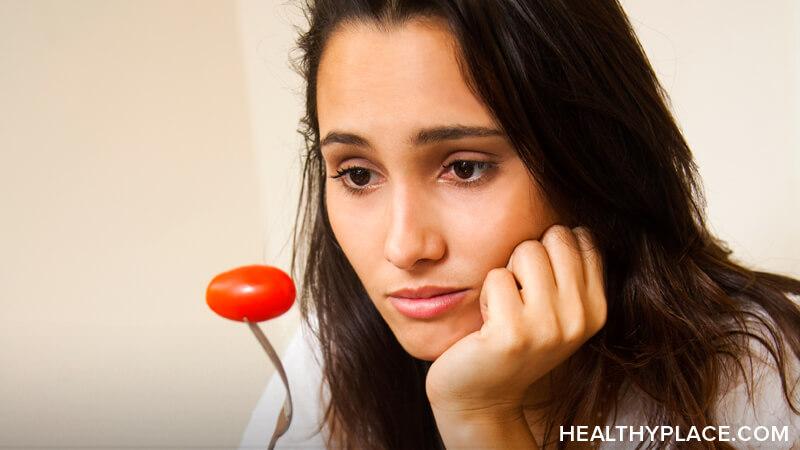
Anxiety and eating disorders often co-occur—that’s hardly a shock to those who live with the harsh realities and ramifications of both illnesses. As the National Institute of Mental Health reveals, 65.1 percent of those with binge eating disorder, 47.9 percent of those with anorexia, and 80.6 percent of those with bulimia meet the diagnostic criteria for anxiety.1
But despite how common this co-occurrence is, there’s no one-size-fits-all reaction to being in the throes of anxiety. Some feel an impulse to “stress eat,” while others find it painful to eat. I fall into the latter category, but I’m also aware that I need nourishment to function—especially when anxious thoughts and emotions threaten to overwhelm me. So how do I cope when anxiety negates my appetite? As with all facets of recovery, it’s a work in progress.
Yesterday was the mid-term election in the United States. Although I voted by mail a few weeks ago, I was incredibly anxious about the results, telling myself I should have been more proactive to ensure the outcome I wanted—as if my singular actions can control all the variables of an election. While I continuously refreshed the news tab on my computer screen to check the latest batch of polling information, I could feel my stomach muscles heave with tension. It had been hours since my last meal (coffee and a piece of fruit), but the sheer thought of food was nauseating. Anxiety had taken over in both the mental and physical sense.
In contentious times like this, I have no trouble justifying caloric restriction. It seems rational—or even natural—to skip a meal. “My digestive tract is under too much pressure right now,” I reason. “Why stress it out more? Fasting will calm the discomfort.” But I also have enough experience in eating disorder recovery to know that small rationalizations of a certain behavior (no matter how harmless it might seem) can lead to a full-blown eating disorder relapse. Anxiety often does wreak havoc on my stomach and intestines, but that is no excuse to deprive myself of nutrients. So here’s how I am learning to cope when anxiety negates my appetite.
Regardless of how anxious I feel, it’s not an option to slide back into my former patterns of eating disorder behavior. This is the commitment I have made to myself, and almost nothing matters more on my list of priorities than healing and freedom from the mental illness that once consumed me. But since I can’t just snap my fingers and banish all traces of anxiety, I need an action plan to stand firm in recovery. That means nourishing myself when it would be more comfortable—and so much easier—to continue subsisting on an empty stomach. Below are a few practical strategies I use to cope when anxiety negates my appetite.
Do you wrestle with anxiety and an eating disorder at the same time? Is it difficult for you to eat when anxious thoughts or emotions rise to the surface? How do you cope when anxiety negates your appetite? Feel free to share your insights in the comment section.
Source
