
The dental industry is in the midst of a technological shift. Electric handpieces, digital workflows, and CAD/CAM systems are redefining how clinicians approach precision, efficiency, and patient comfort. Yet, while the spotlight often shines on the latest innovations, the foundation of a truly future-proof dental office lies in balance. The smartest practices are those that embrace new technologies without abandoning the proven reliability of traditional systems.
In this post, we’ll explore what a modern, future-ready equipment setup looks like, and why air-driven handpieces and compressors still play a vital role in every operatory.
Electric handpieces have transformed restorative and prosthodontic workflows. Unlike air-driven models, they deliver consistent torque and speed, even under heavy cutting loads. This makes them ideal for crown and bridge preparations, implantology, and other precision-driven procedures.
Other advantages include:
For many clinicians, electric handpieces have become the “go-to” for complex restorative work. Their integration with digital dentistry workflows makes them a natural fit for practices investing in CAD/CAM and same-day dentistry.
Despite the advantages of electric systems, air-driven handpieces remain indispensable in a modern dental office. Here’s why:
In short, while electric handpieces may dominate the future, air-driven models remain a must-have safety net—a practical, lightweight, and cost-effective complement to advanced systems.
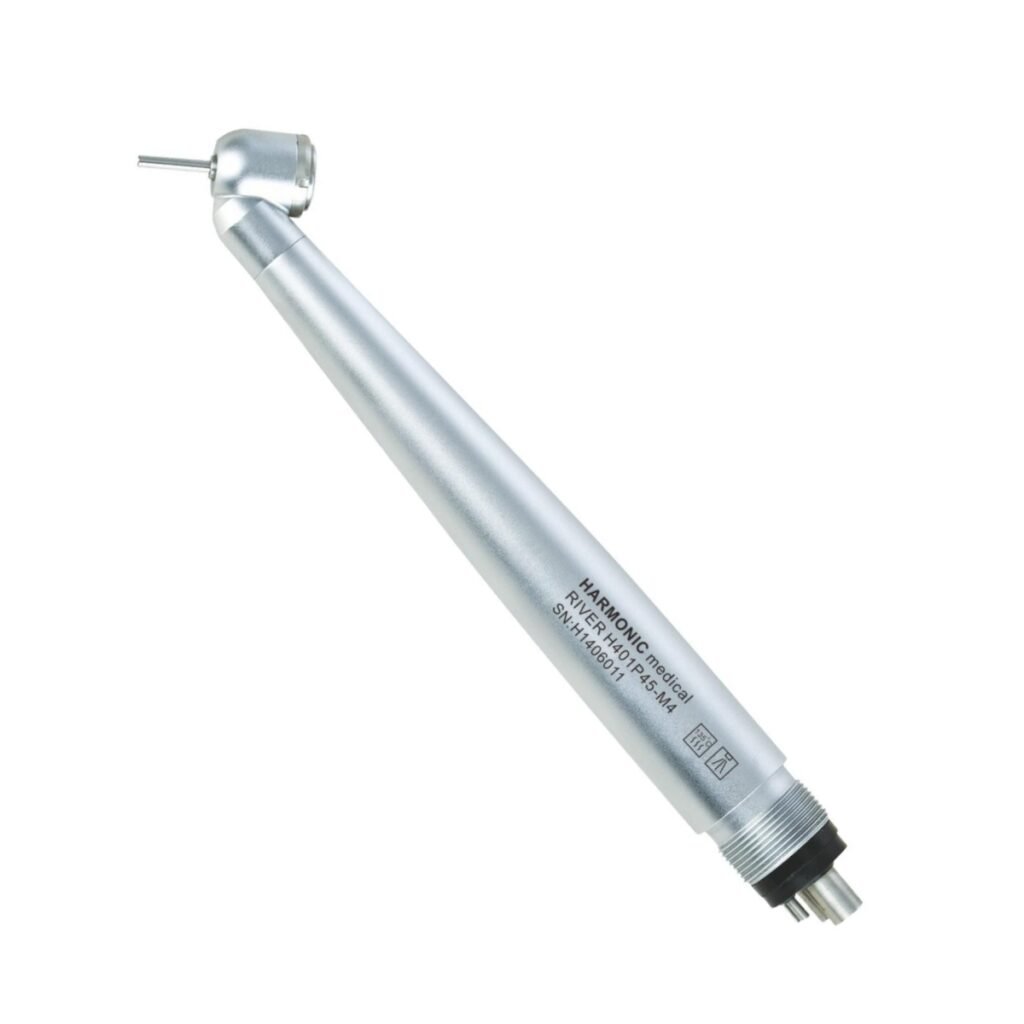
45° angle air driven handpiece, reference source: https://www.dentallaboratorio.com/product/air-driven-handpiece/
Even if a clinic transitions primarily to electric handpieces, air compressors remain essential. They power more than just turbines:
A compressor-free dental office is not realistic yet. Instead, the trend is toward hybrid setups where compressors support auxiliary tools, while electric motors handle precision restorative work.
A modern operatory should be designed with flexibility in mind. Here are the essentials:
By combining these elements, a clinic can remain competitive and adaptable for the next decade.
The future of dentistry is not about choosing between electric and air—it’s about integration. Electric handpieces will continue to lead in precision and efficiency, but air-driven systems provide the reliability, affordability, and redundancy that every practice needs.
A future-proof dental office is one that embraces innovation while respecting the enduring value of proven tools. By investing in both, clinicians can ensure they are ready for whatever the next wave of dental technology brings.
